Longitudinal Analysis of Software Development Skill Demand: Evidence from the Philippine IT Workforce
DOI:
https://doi.org/10.69478/Keywords:
Higher education policy alignment, Labor market analytics, Longitudinal skills analysis, Skills–industry alignment, Software developer competenciesAbstract
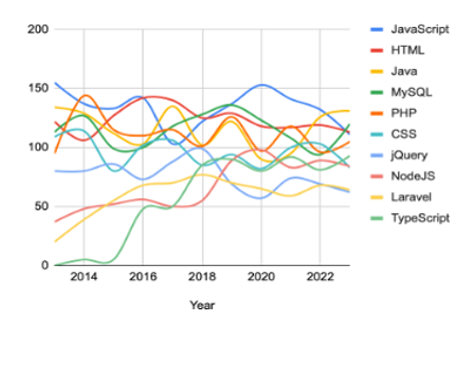
The rapid diversification of software development technologies has intensified the need for academic programs to remain responsive to industry-driven skill requirements. This study investigates longitudinal patterns in programming language adoption among software professionals in the Philippines using publicly available professional profile data. A ten-year dataset (2013–2023) comprising 250 LinkedIn profiles of practicing developers was analyzed through automated text extraction and frequency-based trend analysis. The results reveal sustained dominance of web-oriented technologies, particularly JavaScript, HTML, PHP, and MySQL, alongside a pronounced rise in modern JavaScript frameworks, mobile development tools, and cross-platform technologies. In contrast, traditional content management systems and legacy libraries demonstrate declining relevance over time. To contextualize these findings, the observed industry skill patterns were compared with the prescribed programming components of the Commission on Higher Education (CHED) computing curricula. While foundational languages remain well represented, emerging frameworks and development paradigms receive comparatively limited emphasis. The findings underscore the necessity of adaptive curriculum strategies that balance stable core competencies with evolving industry technologies. The study contributes a data-informed basis for curriculum enhancement aimed at improving graduate employability and long-term workforce relevance in the Philippine IT sector.
Published
Issue
Section
Categories
License
Copyright (c) 2026 Geraldine B. Mangmang, James Arnold Nogra

This work is licensed under a Creative Commons Attribution-NonCommercial 4.0 International License.