Educational Gains and Learning Continuity Through Non-Formal Learning Centers
DOI:
https://doi.org/10.69478/BEST2025v1n1a015Keywords:
Non-formal Learning, Tutorial Centers, Learning Continuity, Learning Gains, Descriptive ResearchAbstract
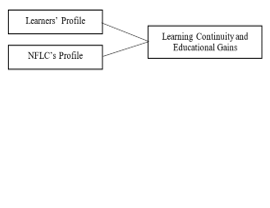
Learning is a continuous process that occurs in various contexts and means. When a system is subjected to disruptive conditions, an alternative learning delivery may even become a pivotal mechanism of continuity in ensuring effective learning. One such learning delivery is through non-formal learning centers (NFLCs), initially and primarily established to provide remediation and enrichment learning for extreme groups of learners – the struggling and the achieving learners. The disruption of in-person classes during the pandemic, the adoption of modular learning delivery, and subsequently, the shift to the new normal made these centers significant learning spaces in the community. This descriptive research presents NFLCs’ role in promoting learning continuity and the corresponding educational gains of enrollees or tutees during and after the pandemic through the perspective of randomly selected parents, center owners & operators, and teachers/tutors. It presents a profile of learners in terms of some demographics and the characteristics of these centers, catering to the educational needs of student-clients. It identified learners’ key educational gains, which include the development of learning strategies and skills, the achievement of academic excellence, personality development, the accomplishment of learning outputs, and adjustment and skills in the adoption of modular learning as a new approach adopted by schools. Moreover, attendance in centers promotes social adjustment to reduce isolation and minimize the negative impact of prolonged exposure to gadgets. These findings indicated learning centers’ role in supplementing traditional classroom learning through a more customized learning program operated as a viable entrepreneurial venture.
References
J. R. Evans, M. Karlsven, S. B. Perry, “Informal Learning,” in The Students' Guide to Learning Design and Research, 2020, EdTech Books, https://edtechbooks.org/studentguide/informal_learning.
M. Johnson, D. Majewska, “Formal, non-formal, and informal learning: What are they, and how can we research them?,” Cambridge University Press & Assessment Research Report, September 2022, https://www.cambridgeassessment.org.uk/Images/665425-formal-non-formal-and-informal-learning-what-are-they-and-how-can-we-research-them-.pdf.
R. Desjardins, “Participation in Adult Learning,” Encyclopedia of Education (Third Edition), Elsevier, December 2010, pp. 240-250, https://doi.org/10.1016/B978-0-08-044894-7.00037-3.
HandWiki, “Informal Learning,” Scholarly Community Encyclopedia, https://encyclopedia.pub/entry/38542.
M. A. Islam, S. D. Barna, H. Raihan, M. N. Khan, M. T. Hossain, “Depression and Anxiety Among University Students During the COVID-19 Pandemic in Bangladesh: A Web-based Cross-sectional Survey,” PLOS ONE, vol. 15, no. 8, August 2020, https://doi.org/10.1371/journal.pone.0238162
B. Brau, “Constructivism,” in The Students' Guide to Learning Design and Research, EdTech Books,2020, https://edtechbooks.org/studentguide/constructivism.
R. Kimmons, S. Caskurlu, “The Students' Guide to Learning Design and Research,” EdTech Books, 2020, https://dx.doi.org/10.59668/10.
K. Chandrasekhar, “Remedial or Developmental Teaching: A Review,” CESS-RSEPPG Background Paper Series #5, Research Cell on Education (RSEPPG), Centre for Economic and Social Studies, Hyderabad, March 2021, https://cess.ac.in/wp-content/uploads/2023/12/CESS_RSEPPG_BPS5.pdf.
S. B. Nolen, “A Situative Turn in the Conversation on Motivation Theories’” Contemporary Educational Psychology, vol. 61, April 2020, https://doi.org/10.1016/j.cedpsych.2020.101866.
Pearce Review, “Independent review of TEF: report,” Department of Education, January 2021, https://www.gov.uk/government/publications/independent-review-of-tef-report.
D. N. Kathula, “Effect of Covid-19 Pandemic on the Education System in Kenya,” Journal of Education, vol. 3, no. 6, November 2020, https://www.stratfordjournal.org/journals/index.php/journal-of-education/article/view/640.
B. J. Calderwood, “Learning Center Issues, Then and Now: An Interview with Frank Christ”, Journal of Developmental Education, vol. 32, no. 3, Spring 2009, pp. 24-27, https://files.eric.ed.gov/fulltext/EJ868670.pdf.
N. Piseth, “Community Learning Centers, Challenges and Way Forward to Become Lifelong Learning Centers,” KHMER Times, October 2020, https://www.khmertimeskh.com/50770707/community-learning-centers-challenges-and-way-forward-to-become-lifelong-learning-centers/.
D. Fung, “Educational Gains Explored,” Report to the Office for Students, March 2024, https://www.officeforstudents.org.uk/media/kshdumib/educational-gains-explored-approaches-in-tef-2023.pdf.
R. Galloway, S. Lancaster, “Learning Gains,” Education in Chemistry, May 2016, https://edu.rsc.org/feature/learning-gains/2000094.article.
Downloads
Published
Issue
Section
Categories
License
Copyright (c) 2025 Gemenee T. Vitudio, Jelyn O. Alentajan (Author)

This work is licensed under a Creative Commons Attribution-NonCommercial 4.0 International License.