Exploring Maritime Waray Students' Experiences with Bisaya Language Understanding: A Phenomenological Inquiry
DOI:
https://doi.org/10.69478/BEST2025v1n1a013Keywords:
Martime, Waray students, Cebuano-Bisaya, Lived experiences, Phenomenological inquiryAbstract
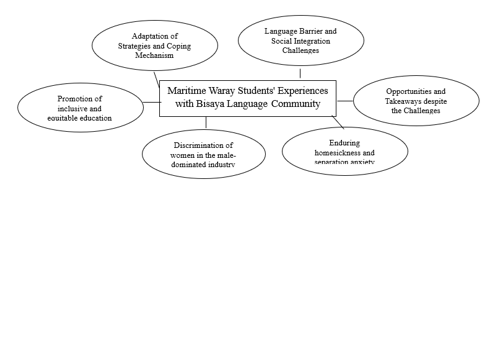
Language of instruction plays a pivotal role in students’ understanding and attainment of quality education. One of the factors that affects students’ understanding and quality of education is language. Thus, language barriers significantly impact the comprehension of information among students. Philippines, being one of the leading producers of seafarers in the world, constitutes a significant portion of the global merchant fleets. The enchantment of a promising career and financial stability paved the way for many Filipino students to take up maritime education, specifically at institutions like Palompon Institute of Technology (PIT). However, students who are non-native speakers of the in the locale are perplexed with understanding both the instruction and communication with locals due to language barrier. This qualitative phenomenological study sought to explore the lived experiences of the purposively selected Waray students at PIT, focusing on their understanding of the Bisaya language and its implications for language education and cultural integration. Data collection was done through semi-structured interviews, which were then analyzed thematically. After the analysis of the qualitative data, six themes emerged, which served as the basis for the discussion. This study concludes that language, culture, and social integration challenges appear to be prevalent among Maritime Waray students, which causes ineffective communication. Moreover, discrimination against women is still rampant. Thus, shedding light on this issue and promoting inclusive education and workspace must be nurtured. Recommendations such as cultivating a more inclusive curriculum, providing learning resources- online and printed, and the protecting women are proposed.
References
A. V. Protacio, “Culturally-Diverse Students’ Lived Experiences in English as Language of Instruction,” vol. 11, no. 2, November 2021, pp. 150-155, https://doi.org/10.46360/globus.edu.220212022.
M. Cyparsade, P. Auckloo, I. Belath, H. Dookhee, N. Hurreeram, “Beating the Language Barrier in Science Education: In-Service Educators’ Coping with Slow Learners in Mauritius,” Science Education International, vol. 24, no. 4, December 2013, pp. 402-415, https://files.eric.ed.gov/fulltext/EJ1022169.pdf.
Q. Abad, “Seafaring and Impact on Seafaring Families in the Philippines: A Qualitative Study,” Public Health Theses, 2014, https://elischolar.library.yale.edu/ysphtdl/2014.
M. Bernardo, S. Almonte-Acosta, “A Closer Look at Internationalism in International Education in the Philippines: A Journey Towards Authenticity,” in Globalizing Minds: Rhetoric and Realities in International Schools, D. Hobson and I. Silova (Eds.), Information Age Publishing, Inc., Charlotte, NC, USA, 2014, pp. 79-98, ISBN: 9781623965860.
M. Cappello, A. G. Ojeda, “Teaching Multimodal and Digital Literacies,” in Handbook of Research on Teaching the English Language Arts, England, UK: Routledge, 2023, pp. 96-115.
K. Brøgger, “Post-Cold War Governance Arrangements in Europe: The University Between European Integration and Rising Nationalisms,” Globalisation, Societies and Education, vol. 21, no. 2, May 2022, pp. 278–292, https://doi.org/10.1080/14767724.2022.2075832.
L. H. Chen, “Moving Forward: International Students’ Perspectives of Online Learning Experience During the Pandemic,” International Journal of Educational Research Open, vol. 5, December 2023, https://doi.org/10.1016/j.ijedro.2023.100276.
A. I. Benediktsson, “Navigating the Complexity of Theory: Exploring Icelandic Student Teachers’ Perspectives on Supporting Cultural and Linguistic Diversity in Compulsory Schooling,” International Journal of Educational Research, vol. 120, 2023, https://doi.org/10.1016/j.ijer.2023.102201.
A. Alam, A. Mohanty, “Cultural Beliefs and Equity in Educational Institutions: Exploring the Social and Philosophical Notions of Ability Groupings in Teaching and Learning of Mathematics,” International Journal of Adolescence and Youth, vol. 28, no. 1, October 2023, https://doi.org/10.1080/02673843.2023.2270662.
C. H. Yu, “Book Review: Creswell, J., & Plano Clark, V. (2007). Designing and Conducting Mixed Methods Research,” in Organizational Research Methods, Thousand Oaks, CA: Sage, vol. 12, no. 4, August 2008, pp. 801-804, https://doi.org/10.1177/1094428108318066.
I. Piller, “Language Barriers to Social Participation,” Language on the Move, August 2022, https://www.languageonthemove.com/language-barriers-to-social-participation/.
C. J. D. Bakun, D. T. Kamilan, J. A. Rajik, “Adapting to the Dominant Language: Challenges and Coping Strategies,” International Journal for Multidisciplinary Research, vol. 5, no. 6, December 2023, https://doi.org/10.36948/ijfmr.2023.v05i06.11164.
World Bank Group, “More Than 1 Billion Women Lack Legal Protection Against Domestic Sexual Violence, Finds World Bank Study,” World Bank, February 2018, https://www.worldbank.org/en/news/press-release/2018/02/01/more-than-1-billion-women-lack-legal-protection-against-domestic-sexual-violence-finds-world-bank-study.
M. Ehsan, “Inclusive Education in Primary and Secondary Schools of Pakistan: Role of Teachers,” American Scientific Research Journal for Engineering, Technology, and Sciences (ASRJETS), vol. 40, no. 1, February 2018, pp. 40-61, https://asrjetsjournal.org/American_Scientific_Journal/article/view/3684.
M. L. Garinga, A. L. Laylo, C. A. Villareal, “Filipino Seafarers’ Use of Facebook to Cope with Homesickness,” LPU–Laguna Journal of International Tourism and Hospitality Management, vol. 4, no. 1, August 2018, pp. 62-80, https://lpulaguna.edu.ph/wp-content/uploads/2018/12/5-FILIPINO-SEAFARERS.pdf.
H. A. Curtain, C. A. Dahlberg, “Languages and Children: Making the Match: New Languages for Young Learners, Grades K-8,” Third Edition, Massachusetts, USA: Allyn & Bacon, September 2003, ISBN: 978-0205366750.
Downloads
Published
Issue
Section
Categories
License
Copyright (c) 2025 Russel J. Maňanita (Author)

This work is licensed under a Creative Commons Attribution-NonCommercial 4.0 International License.