A Pyramid of Strength: The Pedagogical Resilience of Adaptive Mathematics Teachers (PRAM)
DOI:
https://doi.org/10.69478/BEST2025v1n1a009Keywords:
Pedagogical Resilience, Curriculum Transformations, Grounded Theory, PRAM-A Pyramid ModelAbstract
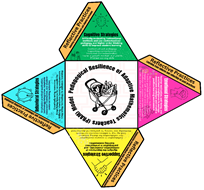
The evolving landscape of Philippine educational reforms—spanning the Revised Basic Education Curriculum (RBEC), K to 12, and MATATAG initiatives—presents formidable challenges for elementary mathematics teachers. This study, grounded in Straussian Grounded Theory, delves into the pedagogical resilience of these educators, investigating the strategies they employ to sustain effective instruction amidst curriculum transformations. Utilizing Symbolic Interactionism as an interpretive lens, the research captures their lived experiences through in-depth interviews with twenty elementary mathematics teachers in the Iloilo Province Division and document analysis. A rigorous qualitative approach—incorporating open, axial, and selective coding alongside constant comparison and memo writing—yielded key themes that illustrate the complexities of adaptation. Teachers reported various challenges, including instructional barriers, resource constraints, inadequate training, technology integration difficulties, workload management concerns, and learner-related issues. In response, they demonstrated pedagogical resilience through five interrelated domains: cognitive, behavioral, supportive, emotional, and reflective strategies. The study culminates in the development of the Theory of Pedagogical Resilience of Adaptive Mathematics Teachers (PRAM), conceptualized through a dynamic Pyramid Model. This model posits that pedagogical resilience emerges from the interaction and reinforcement of these five domains, enabling teachers to navigate curricular shifts effectively. PRAM provides valuable insights for professional development initiatives, institutional support enhancements, and policy reforms, ensuring the continuity and quality of elementary mathematics education in the Philippines.
References
Second Congressional Commission on Education (EDCOM II), “Fixing the Foundations: A Matter of National Survival,” EDCOM II Year Two Report, EDCOM II Publications, January 2025, https://edcom2.gov.ph/publications/year2report/.
Senate of the Philippines, “Findings from the 2024 Functional Literacy, Education, and Mass Media Survey (FLEMMS),” Senate Committee on Basic Education Report, Senate Press Release, https://psa.gov.ph/statistics/education-mass-media.
A. B. I. Bernardo, M. O. Cordel II, M. R. C. Lapinid, J. M. M. Teves, S. A. Yap, U. C. Chua, “Contrasting Profiles of Low-Performing Mathematics Students in Public and Private Schools in the Philippines: Insights from Machine Learning,” Journal of Intelligence, vol. 10, no. 3, September 2022, https://doi.org/10.3390/jintelligence10030061.
Organization for Economic Cooperation and Development, “Future of Education and Skills 2030: Curriculum Analysis Bridging Curriculum Design and Implementation,” in 8th Informal Working Group (IWG) Meeting, OECD Conference Centre, Paris, France, October 29–31, 2018, https://one.oecd.org/document/EDU/EDPC(2018)46/ANN6/en/pdf.
E. A. Nevenglosky, C. Cale, S. P. Aguilar, “Barriers to Effective Curriculum Implementation,” Research in Higher Education Journal, vol. 36, 2016, https://files.eric.ed.gov/fulltext/EJ1203958.pdf.
S. Johnston-Wilder, J. Moreton, “Developing Mathematical-Resilience-Promoting Practices in Teachers,” in Proceedings of 11th International Conference on Education, Research and Innovation, F. Editor, S. Editor, (Eds), Seville, Spain, November 12-14, 2018, pp. 8228–8237, https://doi.org/10.21125/iceri.2018.0049.
S. N. Akkan, T. Horzum, “Illuminating the Landscape of Mathematical Resilience: A Systematic Review,” Journal of Pedagogical Research, vol. 8, no. 1, February 2024, pp. 312-338, https://doi.org/10.33902/JPR.202420093.
G. M. Francom, S. J. Lee, H. Pinkney, “Technologies, Challenges, and Needs of K-12 Teachers in the Transition to Distance Learning During the COVID-19 Pandemic,” TechTrends, vol. 65, no. 4, June 2021, pp. 589–601, https://doi.org/10.1007/s11528-021-00625-5.
M. A. Llego, “Advancing Philippine education: A comprehensive analysis of DepEd programs for 2023,” Buhay Guro, TeacherPH, Department of Education (DepEd), August 2024, https://www.teacherph.com/deped-programs-projects-2023-philippine-education-transformation/.
W. Bacelonia, “DepEd Launches MATATAG Curriculum to Address Basic Education Woes,” Philippine News Agency, August 2023, https://www.pna.gov.ph/articles/1207588.
United Nations, “The Philippines Cooperation Framework 2024–2028,” United Nations Sustainable Development Group, UNSDG Report, October 2023, https://philippines.un.org/sites/default/files/2024-08/UN-SCDF-PHL-2024-2028_Publication.pdf.
National Economic and Development Authority (NEDA), “About AmBisyon Natin 2040,” NEDA Development Planning, 2016, https://2040.depdev.gov.ph/about-ambisyon-natin-2040/.
Downloads
Published
Issue
Section
Categories
License
Copyright (c) 2025 Mark John A. Belleza (Author)

This work is licensed under a Creative Commons Attribution-NonCommercial 4.0 International License.